SATURN

The Jewel of the solar system — Saturn is a vast world of storms, ice, and gravity, crowned by the most spectacular ring system known to science

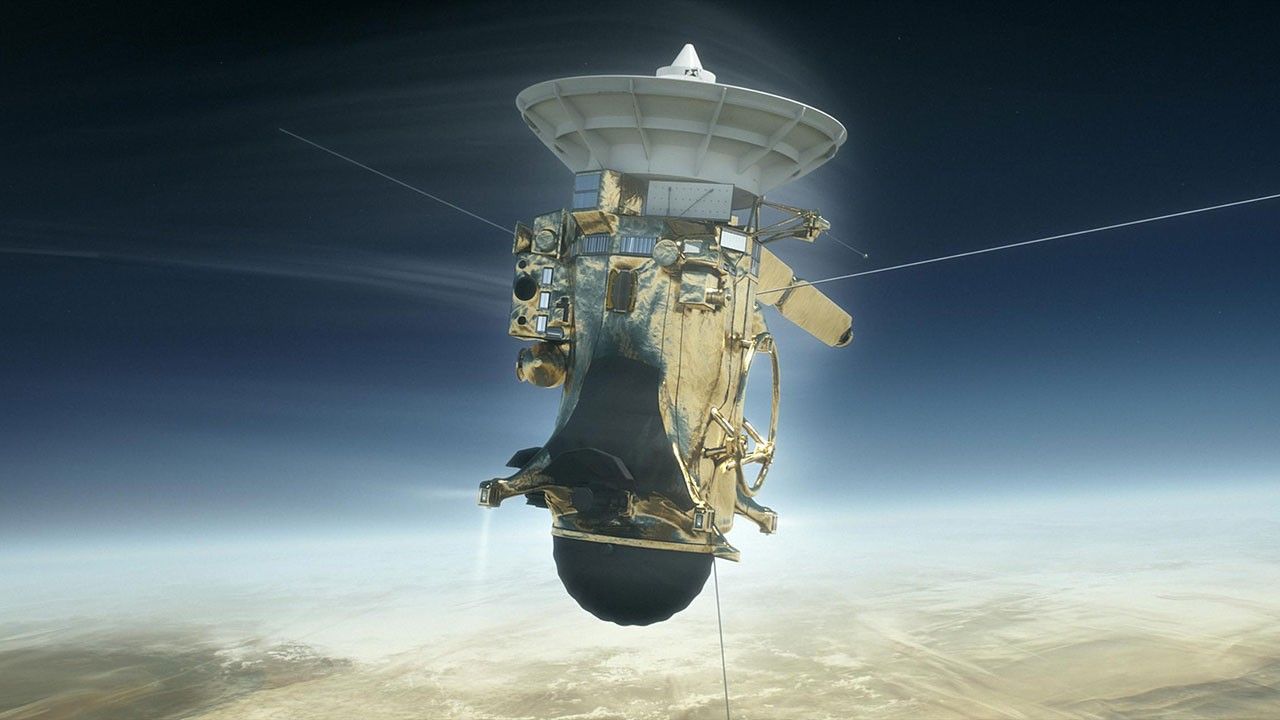
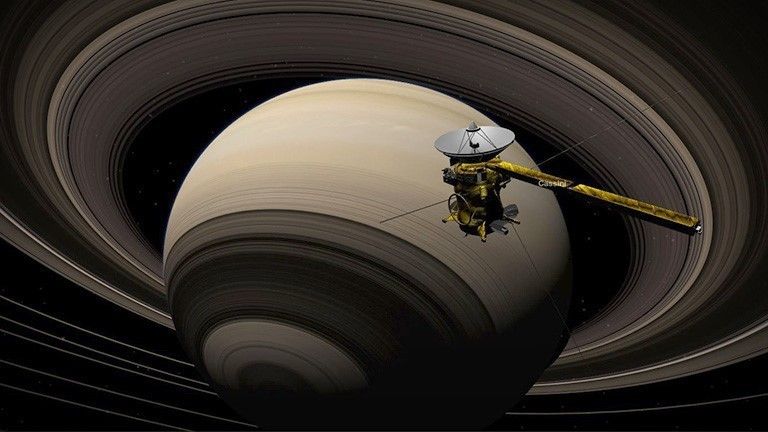
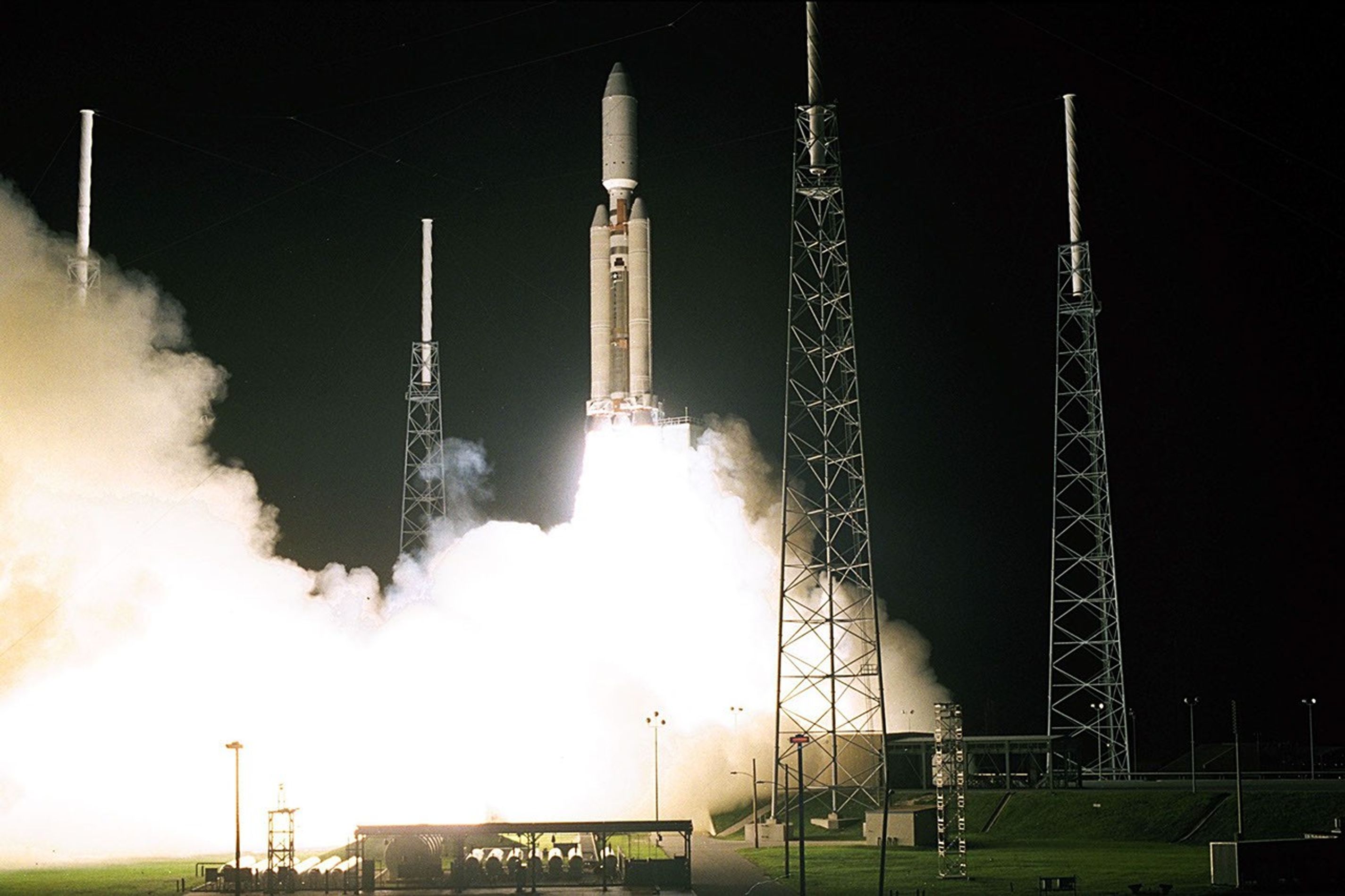
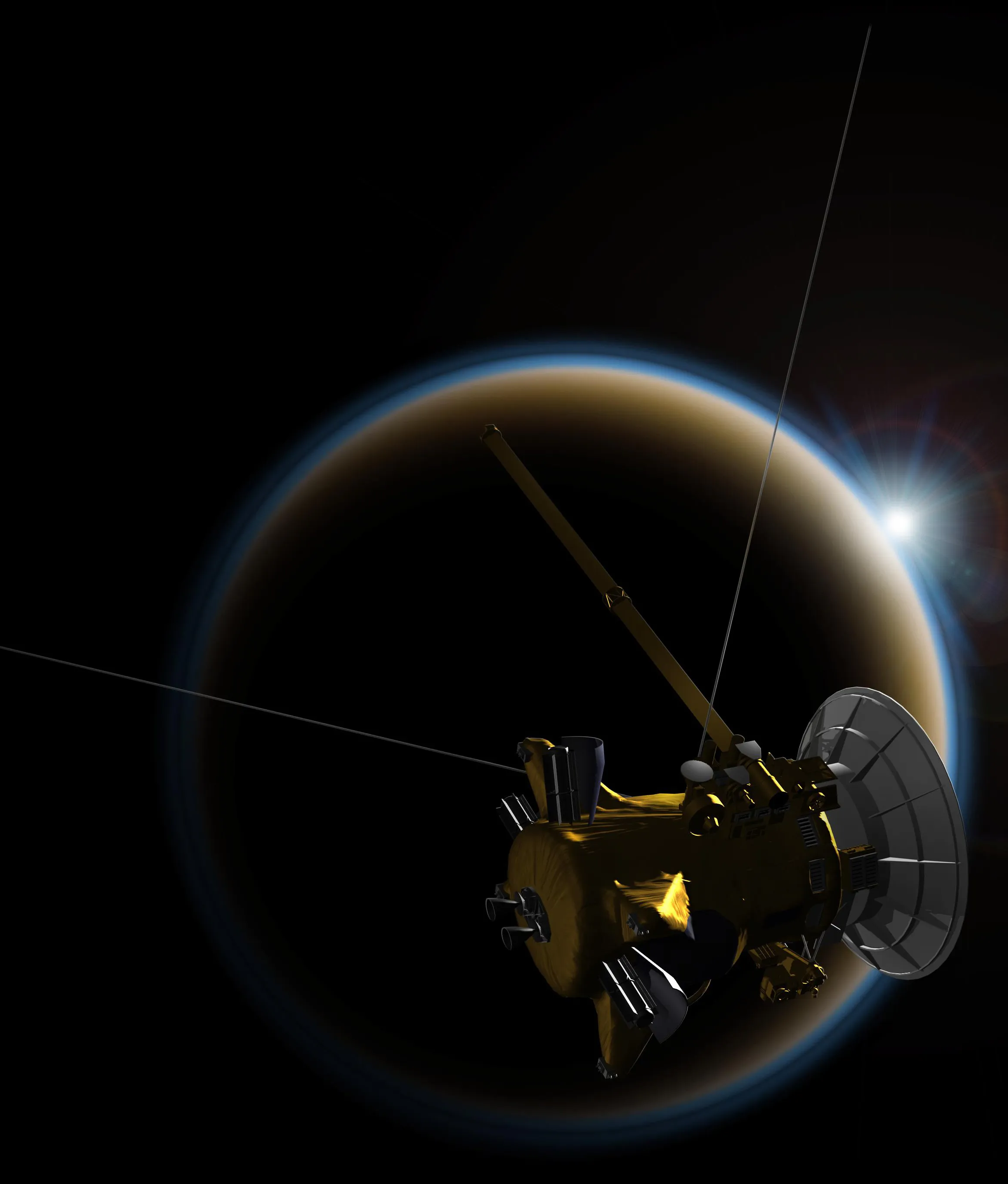
Cassini launch Cassini spacecraft near Saturn

Exploration

Four robotic spacecraft have visited Saturn.

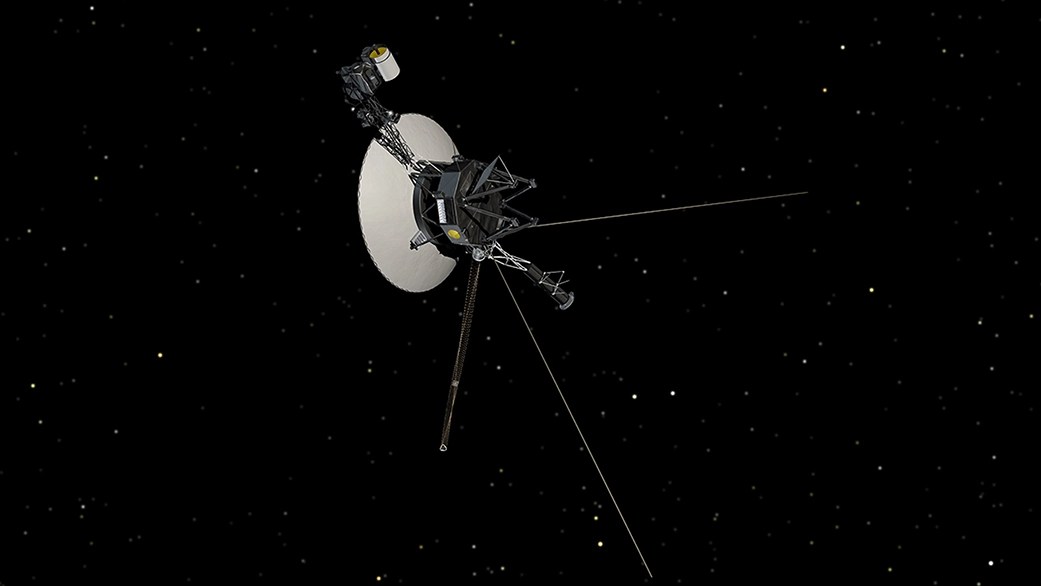
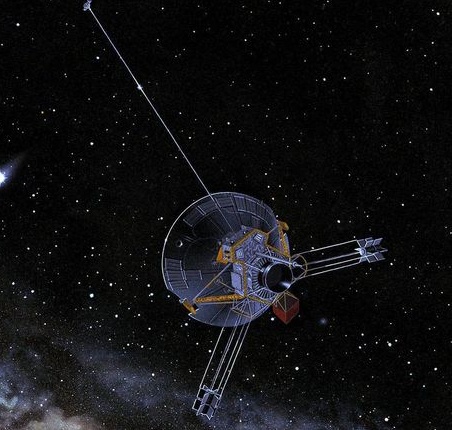
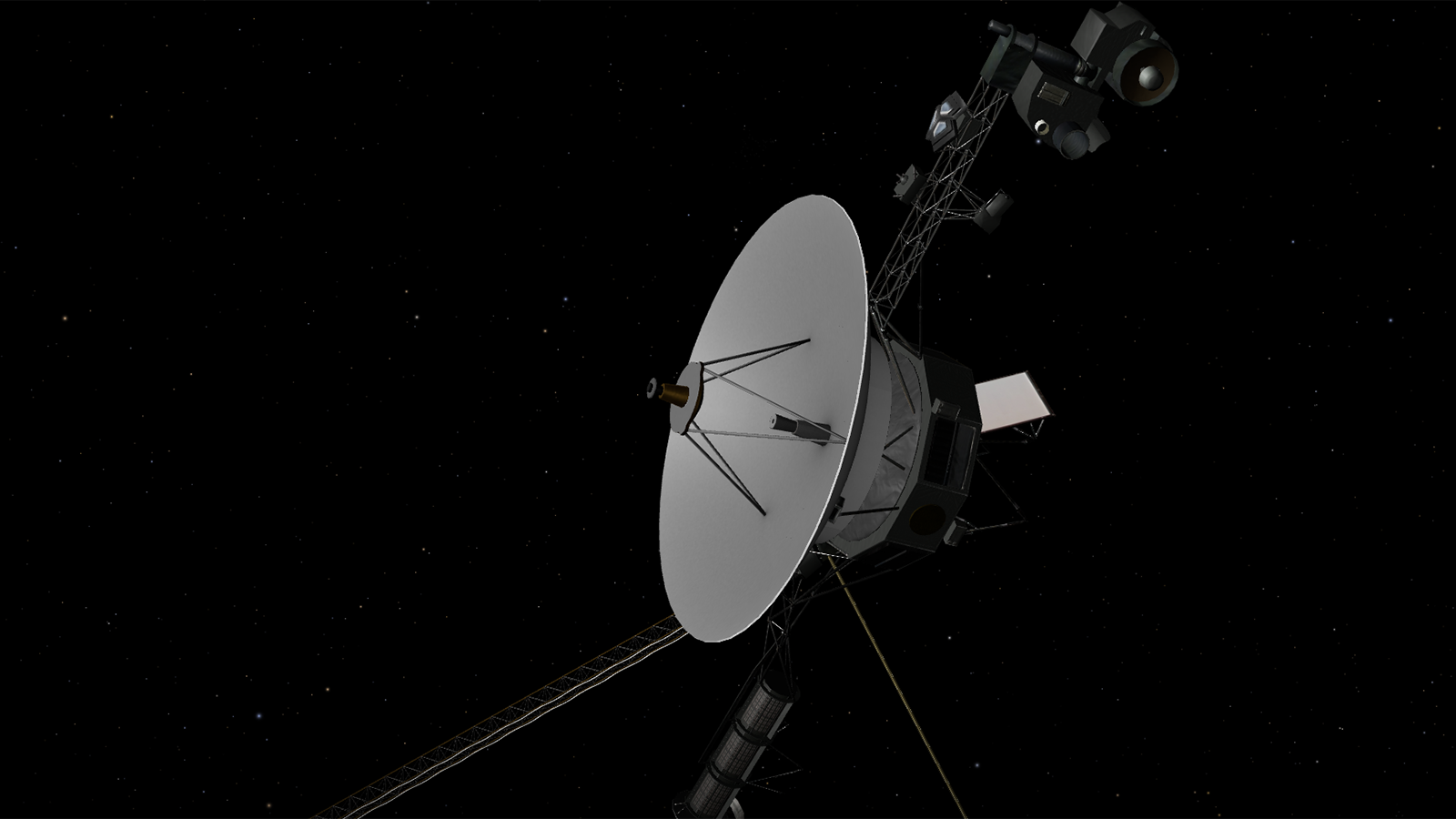
NASA's Pioneer 11 provided the first close look in September 1979. NASA's twin Voyager 1 and Voyager 2 spacecraft followed up with flybys nine months apart in 1980 and 1981. Each flyby revealed intriguing details about the ringed giant world, but it wasn't until Cassini arrived in orbit in 2004 that our understanding of Saturn really started to take shape.

Cassini studied Saturn from orbit for 13 years before its human engineers on Earth transformed it into an atmospheric probe for its spectacular final plunge into the planet in September 2017. Cassini also carried ESA's Huygens Probe, which landed on Saturn's moon Titan in 2005.

From Earth, astronomers have studied Saturn with telescopes for centuries. And the Hubble Space Telescope continues to uncover new details from its perch in Earth orbit.
Facts

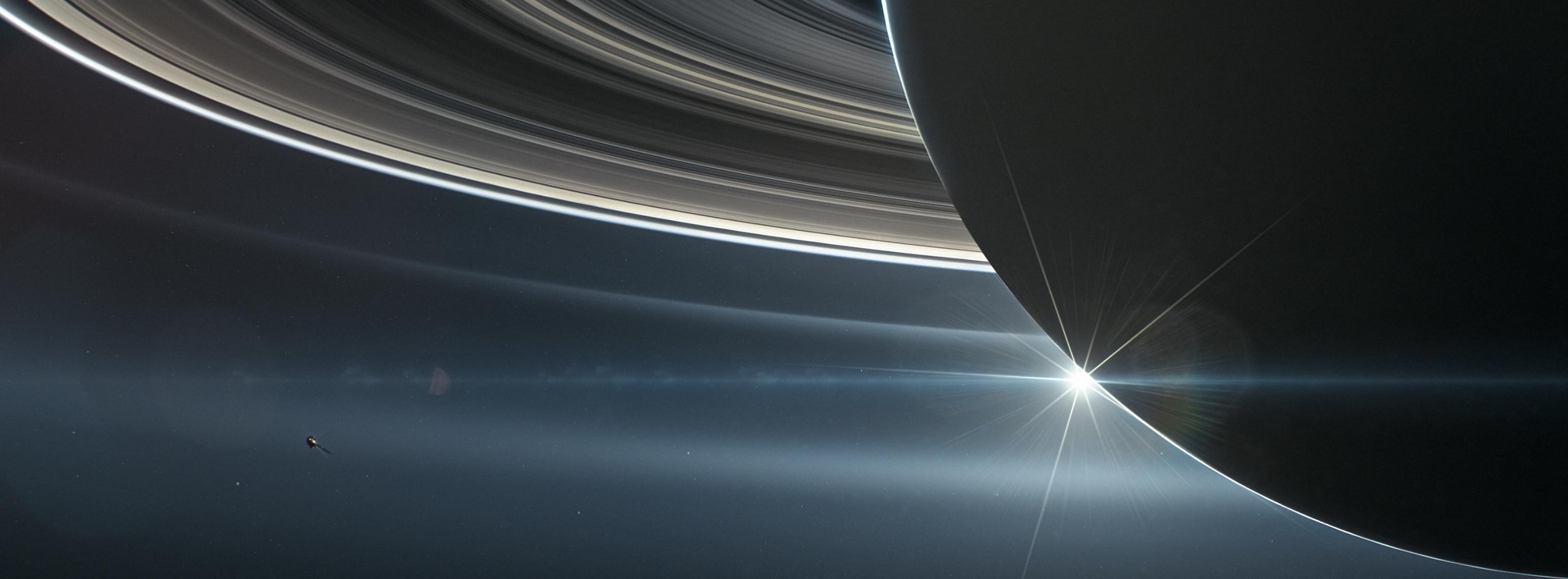
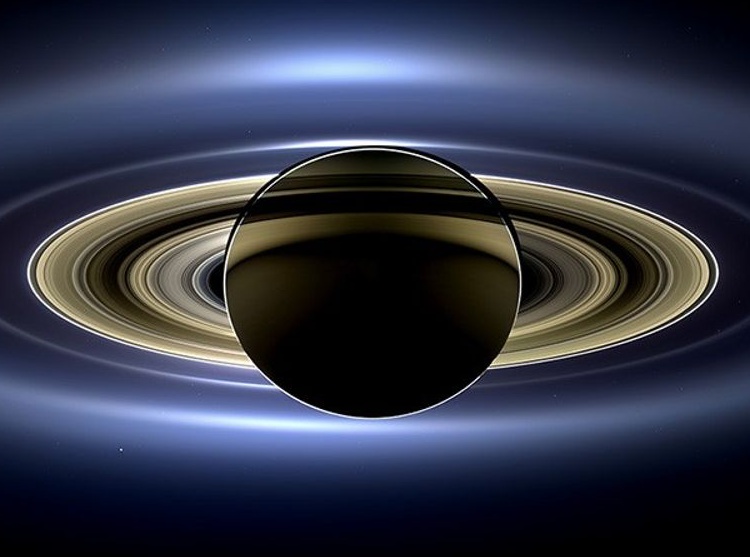
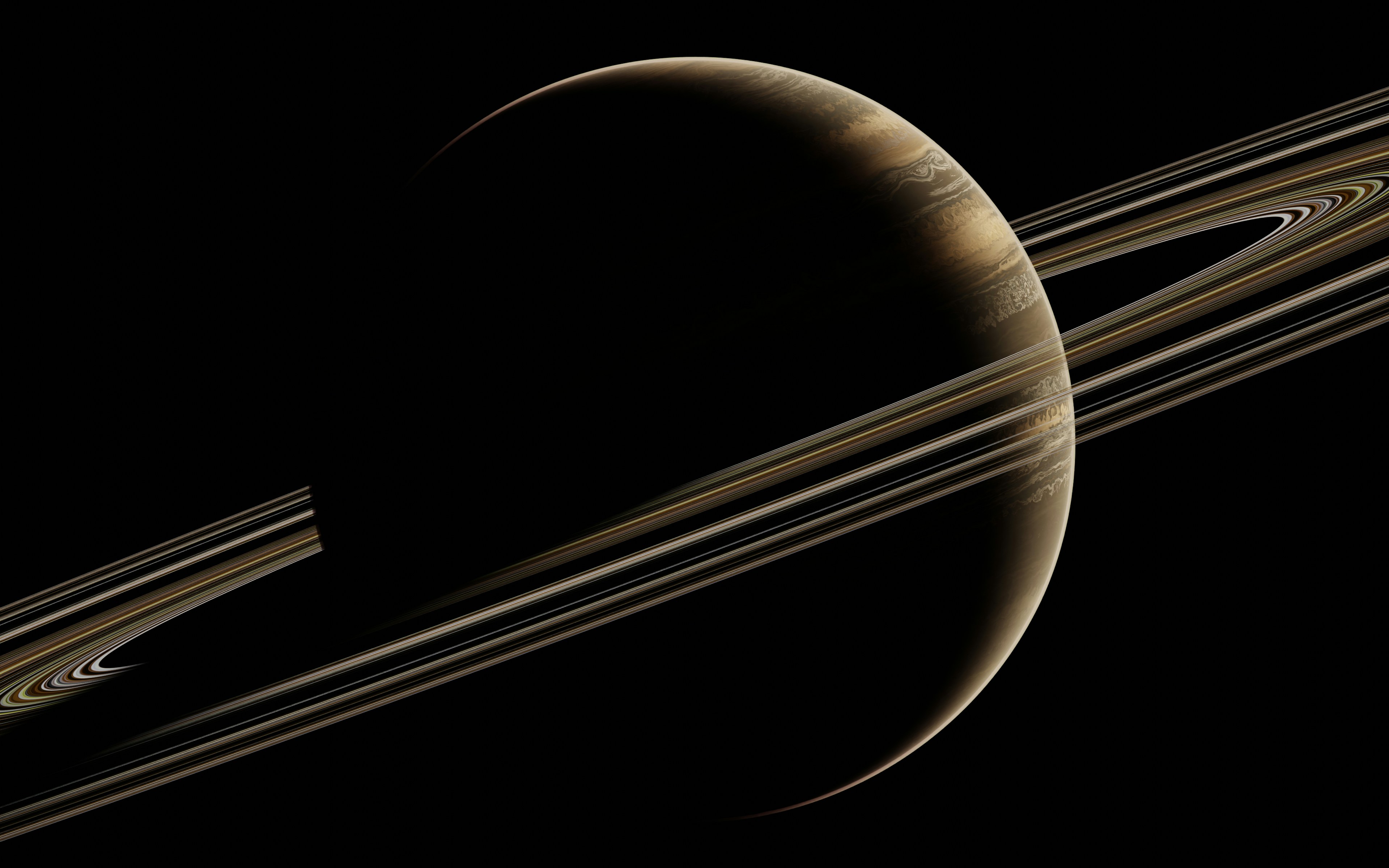
Saturn and its rings lit from behind

Rings

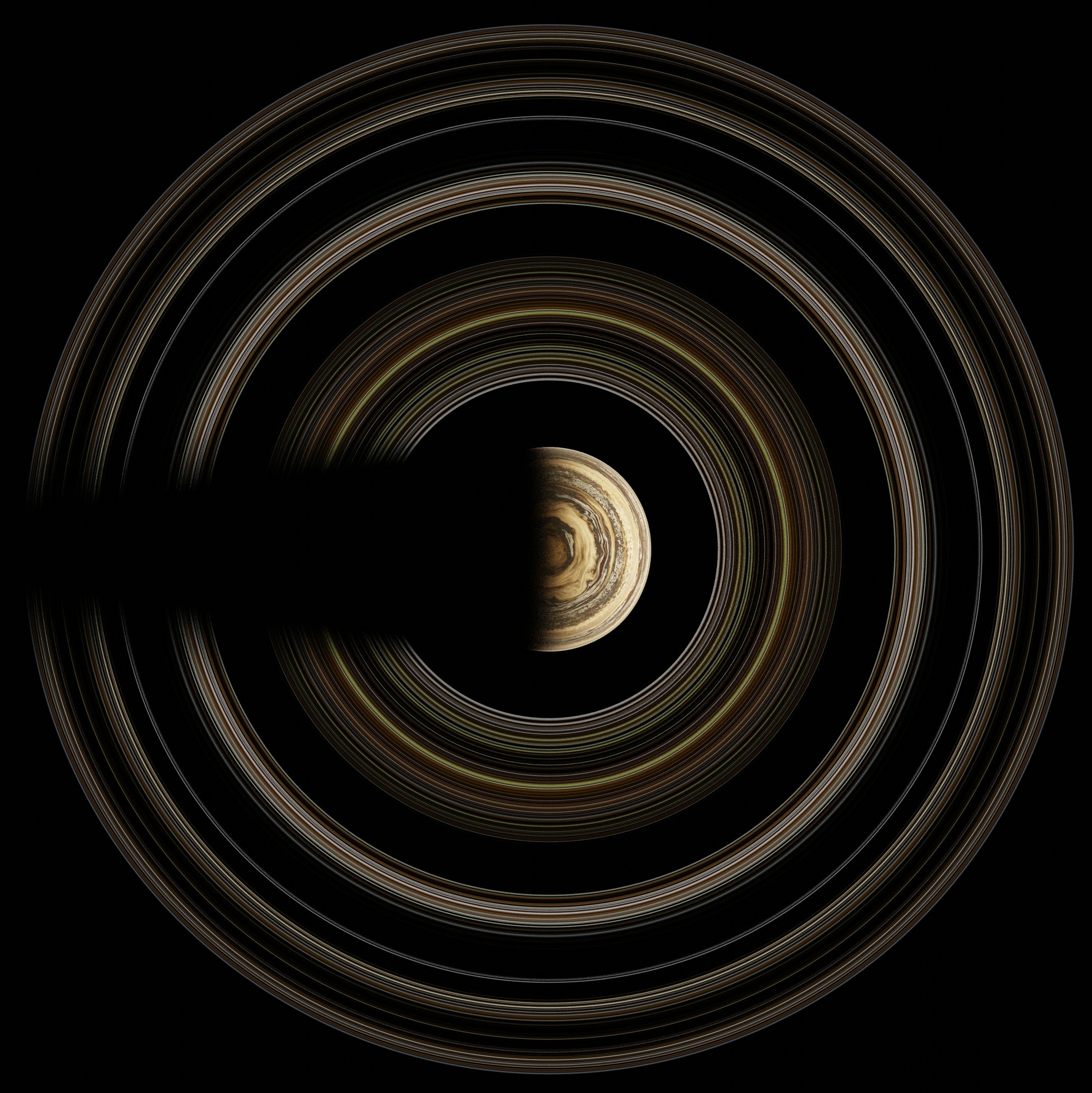
Saturn's rings are thought to be pieces of comets, asteroids, or shattered moons that broke up before they reached the planet, torn apart by Saturn's powerful gravity. They are made of billions of small chunks of ice and rock coated with other materials such as dust. The ring particles mostly range from tiny, dust-sized icy grains to chunks as big as a house. A few particles are as large as mountains. The rings would look mostly white if you looked at them from the cloud tops of Saturn, and interestingly, each ring orbits at a different speed around the planet.

Saturn's ring system extends up to 175,000 miles (282,000 kilometers) from the planet, yet the vertical height is typically about 30 feet (10 meters) in the main rings. Named alphabetically in the order they were discovered, the rings are relatively close to each other, with the exception of a gap measuring 2,920 miles (4,700 kilometers) in width called the Cassini Division that separates Rings A and B. The main rings are A, B, and C. Rings D, E, F, and G are fainter and more recently discovered.

Starting at Saturn and moving outward, there is the D ring, C ring, B ring, Cassini Division, A ring, F ring, G ring, and finally, the E ring. Much farther out, there is the very faint Phoebe ring in the orbit of Saturn's moon Phoebe.

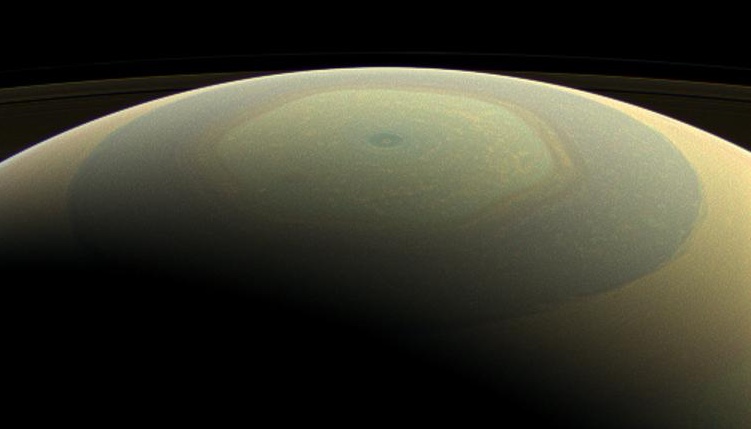
Swirling storm at Saturn's north pole

Atmosphere

Saturn is blanketed with clouds that appear as faint stripes, jet streams, and storms. The planet is many different shades of yellow, brown, and gray.

Winds in the upper atmosphere reach 1,600 feet per second (500 meters per second) in the equatorial region. In contrast, the strongest hurricane-force winds on Earth top out at about 360 feet per second (110 meters per second). And the pressure - the same kind you feel when you dive deep underwater -is so powerful it squeezes gas into a liquid.

Saturn's north pole has an interesting atmospheric feature - a six-sided jet stream. This hexagon-shaped pattern was first noticed in images from the Voyager I spacecraft and has been more closely observed by the Cassini spacecraft since.

Rocky ring particles with Saturn in the distance

Structure

Like Jupiter, Saturn is made mostly of hydrogen and helium. At Saturn's center is a dense core of metals like iron and nickel surrounded by rocky material and other compounds solidified by intense pressure and heat. It is enveloped by liquid metallic hydrogen inside a layer of liquid hydrogen - similar to Jupiter's core but considerably smaller.

It's hard to imagine, but Saturn is the only planet in our solar system with an average density that is less than water. The giant gas planet could float in a bathtub if such a colossal thing existed.

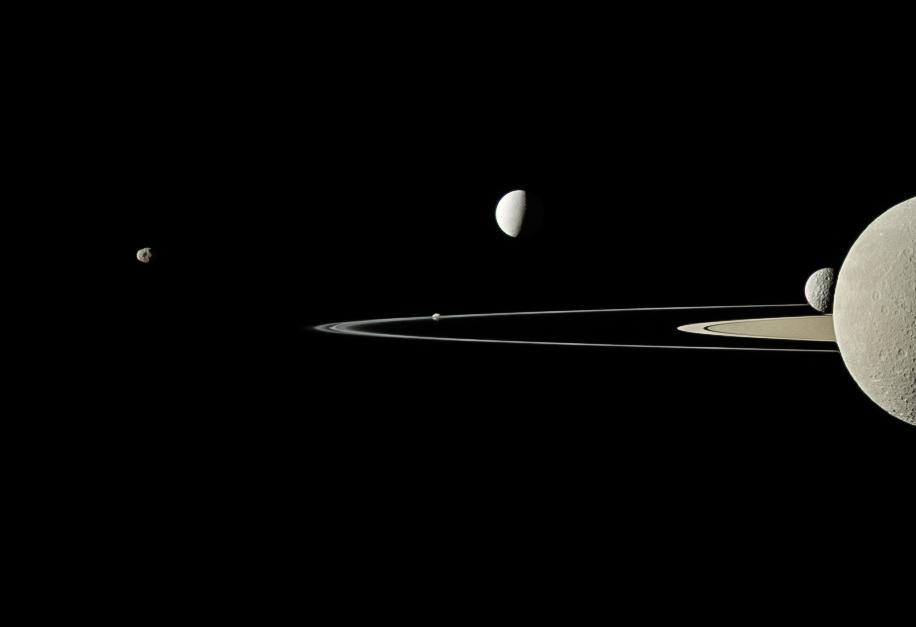
Five moons aligned around Saturn's rings

Moons

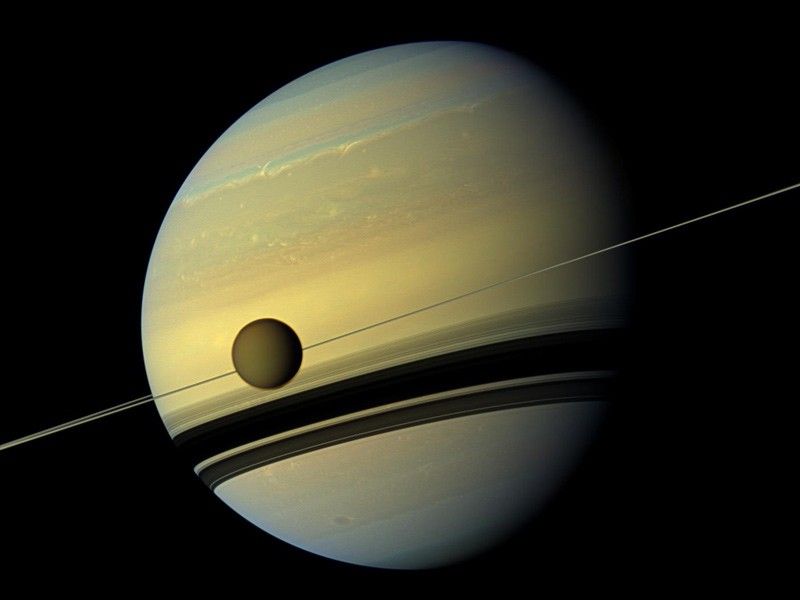
Saturn is home to a vast array of intriguing and unique worlds. From the haze-shrouded surface of Titan to crater-riddled Phoebe, each of Saturn's moons tells another piece of the story surrounding the Saturn system. As of June 8, 2023, Saturn has 146 moons in its orbit, with others continually awaiting confirmation of their discovery and official naming by the International Astronomical Union (IAU).